


What is Myopia
01
What is Myopia?
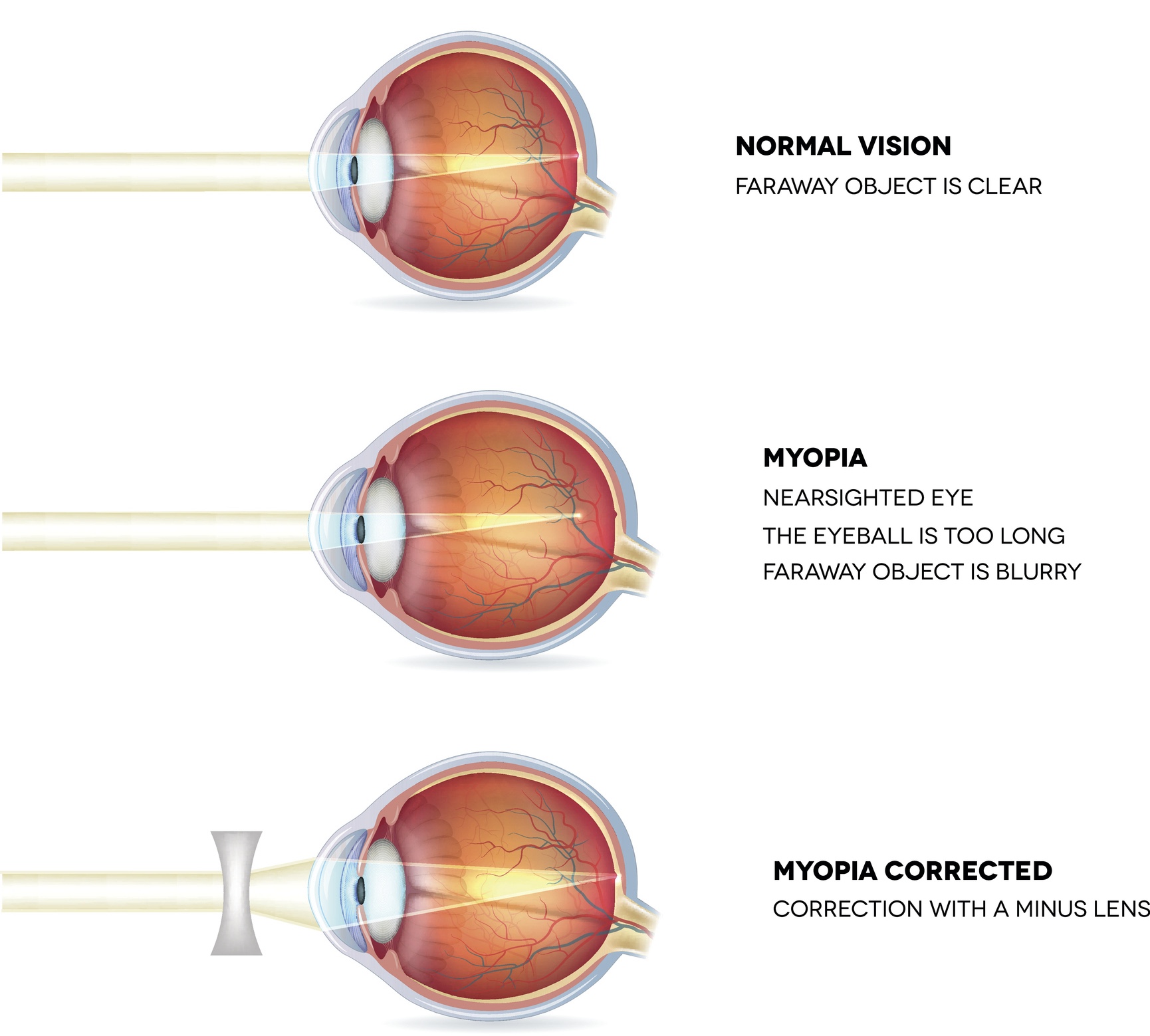
Nearsightedness is a common vision condition in which close objects look clear but far objects look blurry. The medical term for nearsightedness is myopia. Myopia happens when the shape of the eye — or the shape of certain parts of the eye — causes light rays to bend or refract. Light rays that should be focused on nerve tissues at the back of the eye, called the retina, are focused in front of the retina instead.
Nearsightedness usually develops during childhood and adolescence. Typically, it becomes more stable between the ages of 20 and 40. It tends to run in families.
A basic eye exam can confirm nearsightedness. You can correct the blurry vision with eyeglasses, contact lenses or refractive surgery.
Nearsightedness usually develops during childhood and adolescence. Typically, it becomes more stable between the ages of 20 and 40. It tends to run in families.
A basic eye exam can confirm nearsightedness. You can correct the blurry vision with eyeglasses, contact lenses or refractive surgery.
02
What are the symptoms?
Nearsightedness symptoms may include:
- Blurry vision when looking at distant objects.
- The need to squint or partially close the eyelids to see clearly.
- Headaches.
- Eyestrain.
- Constant squinting.
- Seeming to not be aware of distant objects.
- Blinking often.
- Rubbing the eyes often.
- Sitting close to the television or moving screens closer to the face.
03
When to see an eye care provider?
Make an appointment with an eye care specialist if your child shows any signs of vision problems or if a teacher reports possible problems.
Make an appointment for yourself if you notice a change in your vision, have difficulty performing tasks such as driving or find that the quality of your vision affects your enjoyment of activities.
If you have diabetes, a family history of eye disease, high blood pressure, or other risks of heart or vascular disease, you'll likely need more-regular eye exams. Also, you'll likely need more-regular exams if you already have prescription glasses or contacts or if you've had surgery for vision correction. Your healthcare professional or eye care specialist can recommend how often to get an exam.
04
What are the risk factors?
GENETIC FACTORS
- Family history: Children with one myopic parent have a higher risk; if both parents are myopic, the risk increases even more.
- Ethnicity: Higher prevalence in East Asian populations compared to European or African populations.
ENVIRONMENTAL & LIFESTYLE
- Near work activities:
-Prolonged reading, smartphone use, or computer work is associated with increased risk.
-Higher risk if done at a close working distance. - Limited outdoor time:
-Less exposure to daylight is a strong risk factor.
-Outdoor activity appears protective due to bright light exposure, which stimulates dopamine release in the retina, slowing eye elongation.
VISUAL/OPTICAL FACTORS
- Accommodative stress: Eyes constantly focusing at near distances can lead to elongation of the eyeball.
- Peripheral defocus: If light focuses in front of the retina in the periphery, it may stimulate axial elongation.